
Achieve optimum performance by choosing the best location for your radars.
Radars have major advantages over all other detection technologies due to their all weather operation and immunity to darkness, bright glare and shadows. When choosing where to install your radar, follow the guidance below to achieve the best detection performance.
Buildings
In common with optical systems, radars cannot see through buildings.
Position the radar so that buildings do not block detections behind them.
In general, if the target cannot be seen from the radar it will not be detected.

Trees and bushes
Trees and bushes can mask intruders, just like with optical sensors. Moving branches can also cause false alarms.
Our radars can ignore defined areas, minimising false alarms from individual trees and bushes.
Only if absolutely necessary trim back foliage or remove trees.

Fences
Even if you can see through a metal fence, in general radars cannot.
Intruders will be masked behind a fence and sometimes also a short distance in front, especially if the fence is facing the radar as fences can be highly reflective of microwaves.
To overcome this we recommend the use of our Super-Beam radars that are designed for operation alongside fences.

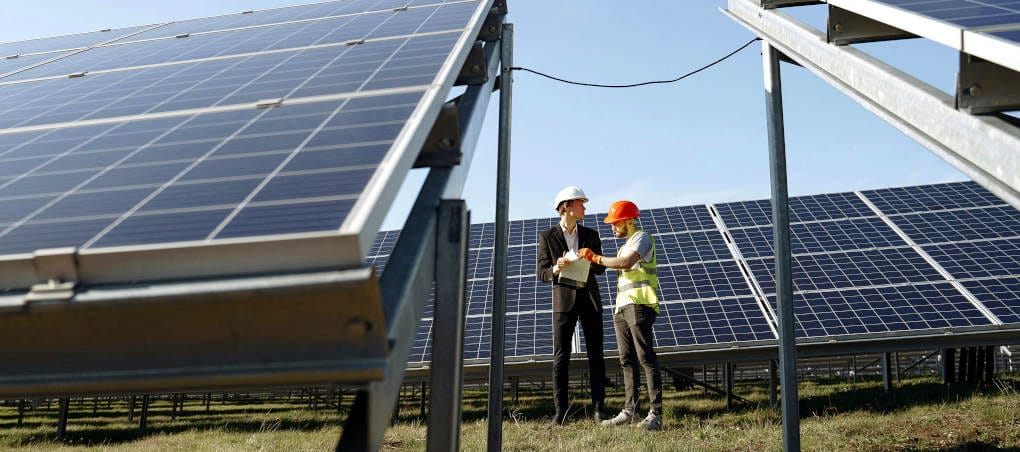
Solar panels
Intruders cannot be detected if obscured by solar panels.
Partial obscuration will degrade performance less than total obscuration.
Panels are highly reflective so avoid orientations where panels present a large flat surface angled towards radar as this further degrades performance.
Radar height
Mount a radar higher to see over obstructions.
Our radars use a special spread beam with broad coverage even when mounted high. For example a Scan-360 mounted 5 metres high will still detect a walking person all the way in until they are only 9 metres away from the radar.

Choose the best radar
Scan-360 radars have wide area coverage. They can be mounted high to see over obstructions.
Super-Beam radars have very narrow detection zones with the highest detection probability, best suited for perimeters alongside fences and between buildings.
Mix and match radars to suit larger sites by selecting the most appropriate radar for each area. Overlap detection zones for complete security.

Need more advice?
Use the contact form to describe your requirements. Upload associated documents to Dropbox or Google Drive and remember to include the sharing link in the contact form message. We will then respond to you via email in due course.
As a minimum, we require an aerial (top down) view, such as Google Map or scaled architectural plan, annotated to show the area(s) where radar coverage is required.
